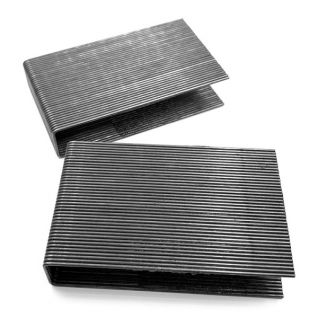
Turf Staples & Landscape U-Pins — Product FAQ
Product Basics
Q: What are turf staples / landscape U-pins?
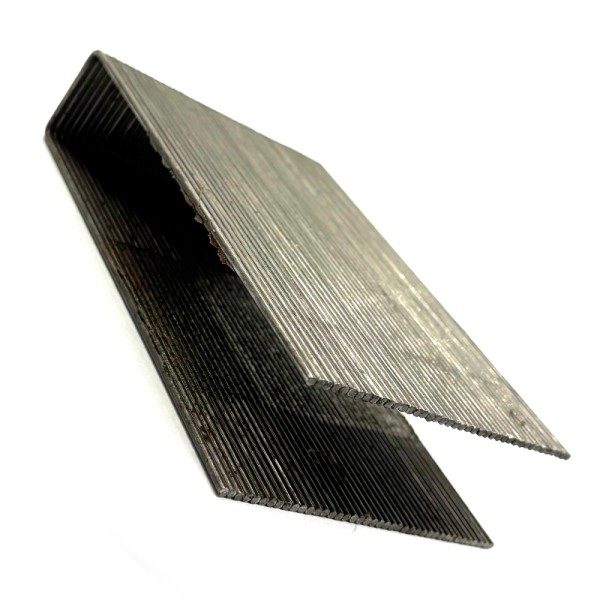
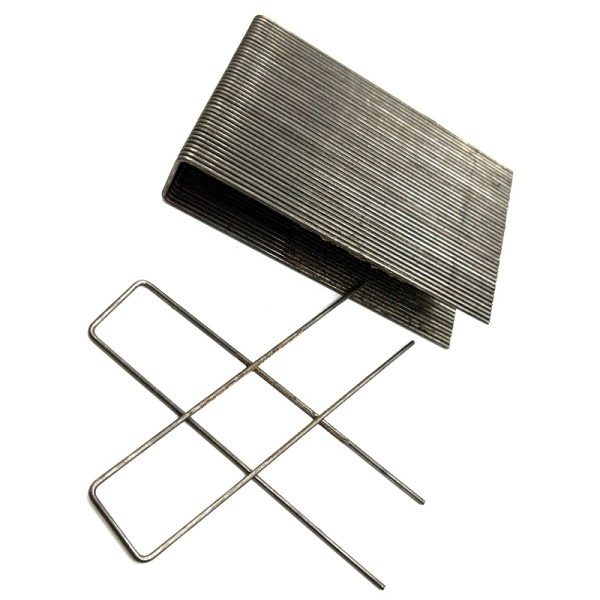
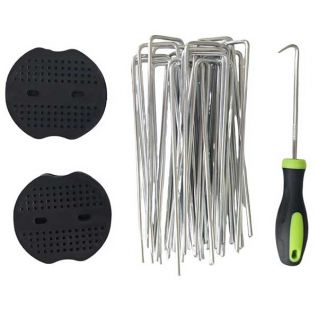
A: They are U-shaped steel ground fasteners used to anchor artificial turf, sod, ground fabric, weed barrier, erosion blankets, netting, irrigation lines and fence mesh into soil or gravel-mixed clay. They are also called sod pins, landscape staples, ground staples or turf fixing pins.
Q: Are these staples reusable?
A: Yes. Our staples are made from solid Q195 low-carbon steel and can be pulled out and reused. Unlike brittle plastic pegs, they resist deformation and can be driven again after removal.
Q: Do I need to pre-drill before installation?
A: No. The 30° precision-chamfered, burr-free tips are designed to penetrate fabric, turf backing and compacted soil with a regular hammer. Pre-drilling is normally not required.
Size & Gauge Selection
Q: Which gauge should I choose?
A:
- 14G / 2.0mm: light ground fabric, mulch cloth, frost fleece and light netting.
- 12G / 2.5mm: artificial turf seams, sod edges, irrigation lines, pet fence mesh and general landscaping.
- 11G / 3.0mm: erosion blankets, slopes, hard or stony soil, heavy-duty hardscape base fabric and high-wind sites.
Q: Which leg length is best?
A:
- 4": light fabric and shallow anchoring.
- 6": standard turf, sod, fencing and garden applications.
- 8": slopes, erosion control, compacted soil and heavy-load fixing.
Custom lengths from 2" to 10" are available.
Q: How far apart should staples be placed?
A:
- Turf seams / sod edges: every 6–8 inches.
- Ground fabric / weed barrier: every 12–16 inches along edges and at intervals across the field.
- Netting / fencing: every 10–12 inches, depending on wind exposure.
- Erosion blankets on slopes: every 8–10 inches, with extra pins at overlap joints.
Material, Coating & Durability
Q: What material are the staples made from?
A: Solid Q195 low-carbon steel, with a tensile strength of ≥420MPa and 180° repeated bending resistance tested for 10 cycles without fracture.
Q: Will the staples rust after being buried?
A: Hot-dip galvanized staples are designed for long-term burial. The zinc layer formed at around 450°C isolates steel from soil moisture, rain, acidic ground and salt exposure, giving a service life 2–3 times longer than ordinary electroplated staples.
Q: What coating options are available?
A: Hot-dip galvanized, electro-galvanized and green PVC coated finishes are available. PVC coated staples add corrosion resistance and color matching, which is useful for visible garden edges or landscape projects.
Q: Can they be used in coastal or wet environments?
A: Yes. Hot-dip galvanized or PVC coated versions are suitable for pool surrounds, water features, coastal plots and high-moisture landscaping. For permanent saltwater exposure, please confirm the coating specification with our team.
Installation & Performance
Q: Can these staples be driven into hard or stony soil?
A: Yes. The solid steel core and 30° chamfered tips are designed for compacted soil, gravel-mixed clay and stony ground. For very dense ground, an 11G × 8" size is recommended.
Q: Will the staples bend during hammering?
A: Our staples use a flat crown design to disperse hammer force evenly and reduce bending. Correct hammering technique — striking the crown squarely — further improves installation results.
Q: Do they hold well under wind or foot traffic?
A: The U-shape develops bidirectional clamping force as soil compacts around the legs. This helps resist wind lift, foot traffic, pet movement and mower vibration once installed.
Q: Can they damage artificial turf backing or fabric?
A: When installed correctly, the smooth polished surface and controlled penetration help minimize snagging. Staples should be driven through seams, edges or fabric overlaps rather than punched randomly through visible turf surfaces.
Packaging, MOQ & Customization
Q: What packaging options do you offer?
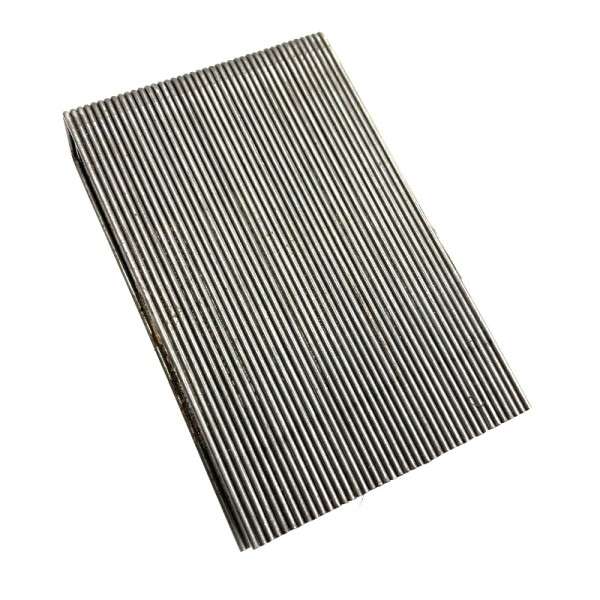
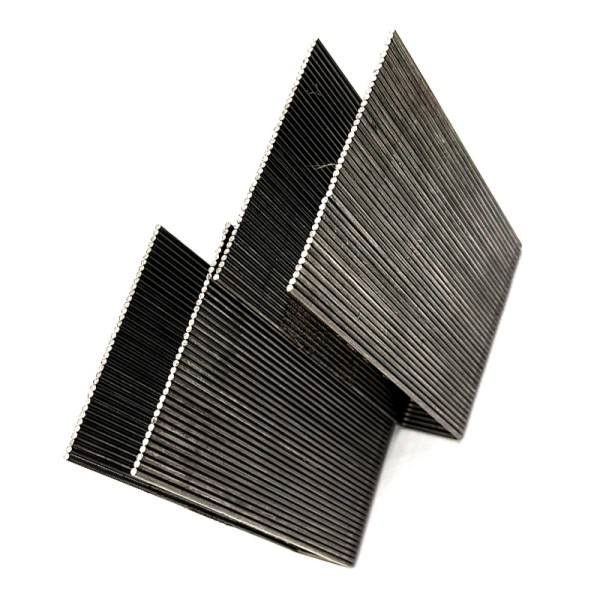
A: Standard options include 50 pcs/bag, 100 pcs/bag, 500 pcs/carton and 1000 pcs/carton. Mixed-size packing, private bag labels and OEM carton logos are supported.
Q: What is the MOQ?
A: MOQ depends on specification, coating and packaging. Small trial orders and sample requests are accepted. Please contact us with your required size, quantity and destination for an exact quotation.
Q: Can you customize size, crown width or coating color?
A: Yes. Wire diameter, leg length, crown width, coating type and PVC color can be customized. We also support private-label packaging for distributors, garden centers and online sellers.
Q: Do you provide samples?
A: Yes. Samples can be provided for specification confirmation before bulk ordering. Please share your target application, size and coating preference.
Shipping, Quality & After-Sales
Q: How do you ensure batch consistency?
A: Each batch is produced under strict dimensional tolerance control. This helps ensure consistent gauge, leg length, crown width and coating quality across large orders.
Q: Can you supply for large municipal or commercial projects?
A: Yes. We support high-volume supply for landscaping contractors, municipal greening projects, sports field installation and erosion control works. Batch consistency and flexible packaging are available for project logistics.
Q: What information should I provide for a quotation?
A: Please share:
- Application scenario
- Gauge and leg length
- Coating type
- Estimated quantity
- Packaging requirement
- Destination port or address
Secure Artificial Grass and Landscape Fabric with Durable U-Shaped Staples
Galvanized turf staples designed for artificial grass, sod, weed barrier fabric and garden ground fixing.
Key Benefits
- Rust-resistant galvanized finish
- Sharp-point legs for quick penetration
- U-shape design for stable anchoring
- Suitable for lawn, garden, yard and commercial landscaping
- Available in multiple lengths and gauges
-
Application Scenarios
- Artificial grass seams and edges
- Sod and lawn roll installation
- Weed barrier and mulch cloth fixing
- Garden netting and irrigation line securing
- Erosion control, slopes and outdoor ground cover
-
Installation Guide
- Position the staple at seams, edges or fabric overlaps.
- Hammer the crown until it sits flush with the ground.
- Cover with infill, mulch or soil for a clean finish.
- Check spacing every 6–16 inches depending on application.